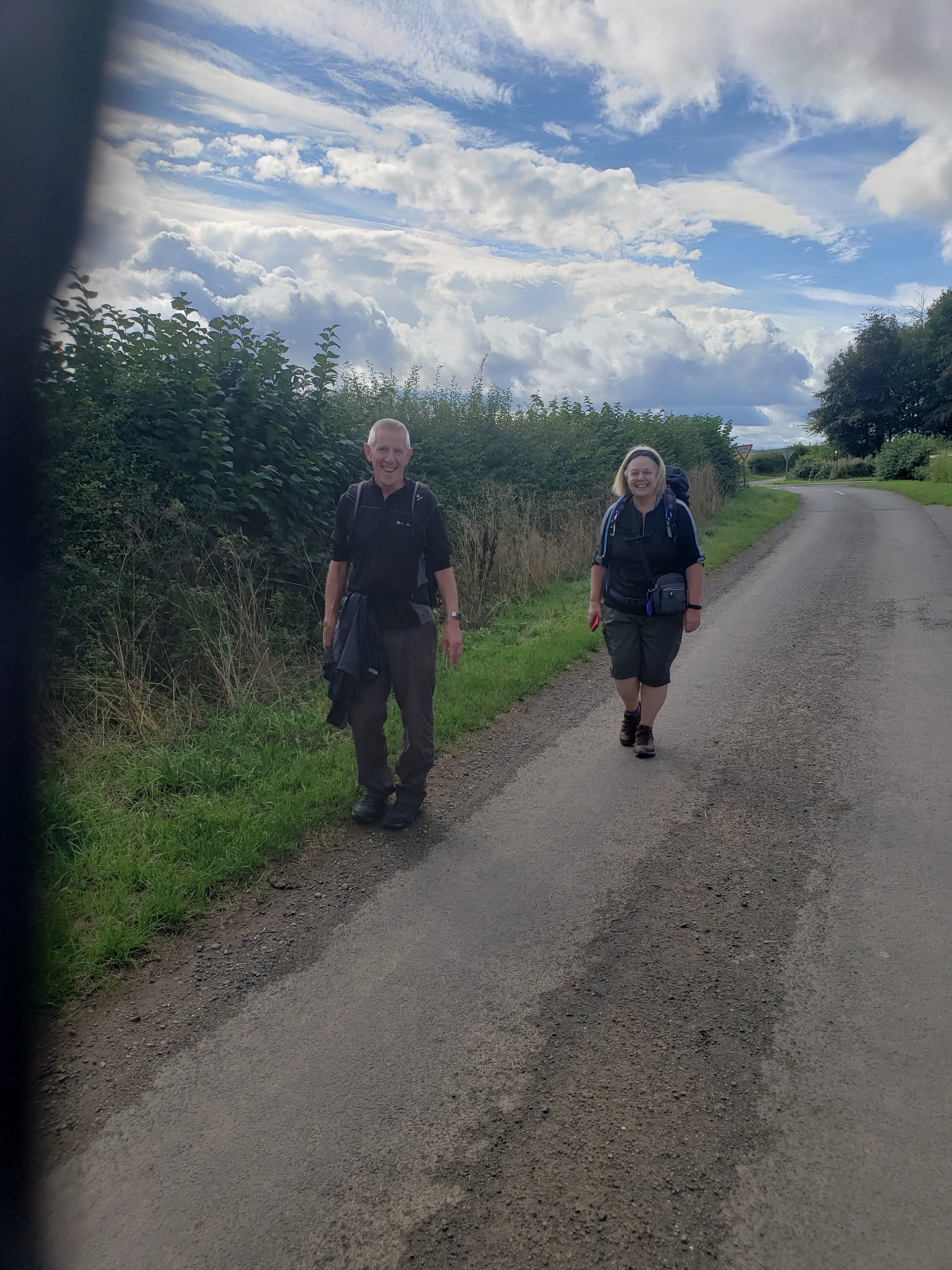
Thursday, 25 May 2023

Northumberland Coast Path

15th- 19th May 2023


Introduction


The completion of my nineteenth and last national trail involved Mike and me finishing last year’s walking week at Berwick upon Tweed. With the certificate from the LDWA National Trail Register came the news that the entire England Coast Path had now been added to the list. So, it was back to Berwick for this year’s episode, to attempt to complete the Northumberland section of this 2,700-mile odyssey. Little did we know what difficulties would be encountered in returning to Berwick by train.


Our Northern train to Manchester was cancelled and we were fortunate that the following Avanti express was on time. The TransPennine train to York was cancelled and again we had to make do with a later service whose three coaches made overcrowding on cattle trucks seem humane. In getting so many people on board, the train was late arriving in York and we had to run through a tunnel between platforms to catch our LNER connection (which was held for us, thank goodness). So, more by good luck than judgement, we arrived at Berwick at the prescribed hour. No time for a cafe, we had a full-day’s walking in front of us and it was well after mid-day.


Monday 15th May 2023                     Berwick upon Tweed - Fenwick

Cancelled Trains


We set off immediately from the station, descending a set of steps through a wooded dingle to the riverside path below the Royal Border Bridge. Within minutes we were standing on the Old Bridge where last year’s trek had ended. Crossing the river, we saw our first way markers for the England Coast Path. Along Dock Road and through the quiet suburb of Spittal, we were soon up on the low cliffs on a grassy path squeezed between the railway and the sea. The route joined a narrow lane leading to a car park containing a feature that stopped us in our tracks, an ice cream van. The tarmac eventually gave way to a track into the dunes. Here I got off line slightly walking nearer the sea than intended but we were rewarded by a wonderful spread of cowslips stretching as far as we could see. At Cheswick Shiel, we corrected our misalignment, crossing a golf course to the club house and back onto route.


A long lane took us passed Beachcomber House and onto a grass path behind the dunes. Encountering the first of many estuaries, the route turned inland to cross the stream at Beal Sluice. A boggy section of path ran round the high-water line of the tidal marshes to reach the causeway road heading for Lindisfarne. Weaving between the concrete blocks that were intended to stop people from parking, we continued up a series of field paths to the railway line. Being the East Coast main line, the trains pass at high speed and the signalman has to be contacted by phone to ensure that it is safe to cross the track. After waiting for one train, we leapt across and up the next field. Within a minute two more trains thundered across behind us, illustrating the need for caution. A few minutes later, we were crossing the A1, just as dangerous as the railway, and searching for our accommodation in Fenwick. Because the pub providing the only food in the area wanted us there early, we had very quick showers before    setting off walking again, 


Berwick dep. 12.41, Fenwick arr. 17.25

GPS 12.60 miles in 4hr 44mins 26secs walking time, plus another 2.5 miles to and from the pub. Stayed at Fenwick b&b, Aidanfield, Fenwick and ate at the Lindisfarne Inn, over a mile away by quiet country lanes. I had game cottage pie followed by rhubarb crumble and custard all washed down with Secret Kingdom (4.3%) from Hadrian Border Brewery.


Tuesday 16th May 2023                Fenwick – Seahouses

Gorse in Full Bloom


On a bright and breezy morning, we left our lovely b&b after an excellent breakfast. I lost Mike in the village store. He popped in to buy a sandwich for lunch and then got talking. I eventually returned to the village to search for him and found him still in the shop. At last, we were on our way, up a long straight lane leading into wooded hills. The turn-off was onto a contouring field path giving good views over Lindisfarne and the coast. In the forest, the path became muddy with evidence of windblow from recent storms. Eventually we emerged onto open moorland and the flowering gorse made a blazing yellow spectacle in the morning sunshine. Fabulous views of distant Bamburgh Castle were all too soon interrupted by a turn downhill through forestation down to Swinhoe Farm. The descent to Belford was through grassy pastureland, passed a fortified farm with a castle on one end. Belford looked a pleasant town and it provided me with a Co-op for a sandwich and a small coffee shop, Well House, for a welcome coffee and cake,


The exit from the town was passed a huge industrial complex consisting of many silos, all identical. Could this be grain? Without an answer, we crossed the main railway line for a second time, complete with the usual phone-call to the signalman. More high pasture was to follow, this time grazed by young cattle, with fields of oil-seed rape below. At the next lane, I was aware that all was not as per the maps or previous experience. The advent of the new England Coast Path project had resulted in a complete re-route. The newly signed trail ran closer to the sea, circumnavigating Waren Mill via a campsite and footpaths not on any of our maps. We gained the shore of Budle Bay on a busy road running along the shore-line where a pair of eider ducks was swimming. Another new coast path fingerpost took us from this road down to Kiln Point. Here we sat by the shore and ate our butties.


Re-joining the original path systems, the afternoon section traversed the golf course with Bamburgh Castle getting intimidatingly closer. So was poor weather. As we stood on a sandy path beneath the great ramparts, a drizzle came in from the sea. Donning our rain gear we traipsed on, getting wetter from the long grass and shrubs than from the rain. Beyond the castle, we took to the waymarked path into the dunes. This ran parallel with the coast road but gave soft, sometimes very soft, off-road walking. This two-mile part of the walk emerged from the dunes in the outskirts of Seahouses. A dreary seafront led into town and its bustling little centre. Our accommodation was just inland but was easy to find from the instructions. T could not access the e-mail with the access code to the room but we were able to get help from reception and were soon showering and changing from our wet clothes.


Fenwick dep. 09.00, Seahouses arr.16.55

GPS 16.66 miles in 6hrs 57mins 37secs walking time plus 30 mins at Well House Cafe in Belford and 20 mins eating our sandwiches at Kiln Point.

Stayed at Links Lets, Seahouses, and ate at the Olde Ship Inn. I ordered fish and chips and mushy peas. The golden syrup sponge was served in an old Tate & Lyle syrup tin and we just added custard. The beer was Farne Island (4.0%) and Grainger Ale (4.6%) from Hadrian Border Brewery.


Wednesday 17th March 2023           Seahouses – Alnmouth

Breakfast at Beadnell


Our accommodation did not provide breakfast, in fact it provided nothing but a small rather stuffy room. We had been provided with a list of breakfast providers. Unfortunately, none of the local ones opened before 10am but an early opening café was recommended in the next village. So, we packed our sacks and set off, with our usual butty purchase at the Co-op, passed the harbour and out over the golf course. The day was bright and clear, much better than the previous dreich afternoon. We met a lady on her morning walk who enquired about our early start. When she heard about our quest for some breakfast, she offered to take us home and provide. We thanked her for her kind offer but continued on our coastal journey with the village of Beadnell as our immediate target. The Courtyard Coffee Shop was advertised on a handwritten board at the end of The Haven, a road to Farne Hall and the Craster Arms. Soon we were tucking into a huge breakfast, me with a stack of pancakes. Not a bad start to the day.


We left Beadnell along the beach which provided easy walking until we encountered the Long Nanny River where we were diverted upstream around an area cordoned off for nesting birds. Crossing Long Nanny Bridge, we were back on a grassy path in meadows full of buttercups. It was back into civilisation at Lower Newton where the beach and pub were full of visitors. In the dunes beyond, the path weaved between a encampment of wooden cabins before emerging onto a series of golf courses. We met the lady who had earlier in the day offered to give us breakfast, She was now out walking with friends, Signs took us round the edge of the golf courses heading for Dunstanburgh Castle which appeared as a flat -topped ancient hillfort. The castle looked more impressive looking back from the south side. Cropped grassland, one huge lawn, stretched out before us most of the way to Craster. This was another busy village bustling with holiday-makers, again focussed on and around the pub. We found a quiet spot on the edge of the village with a table in a kiddies play area. Time to eat our butties.


The last section of the day was a pleasant stroll along clifftops with nesting seabirds swirling over the sea. The small village of Boulter was soon behind us and the complex of buildings including the clubhouse at Foxton Hall dominated the view. The official route of the coast path goes through the clubhouse grounds before crossing more fairways and greens. The walk ended with a climb up to a spectacular viewpoint over Alnmouth, then a steep descent into the town, passing the pub where we were staying. So, we abandoned our trek, had showers and refreshments in our room and completed the last mile round the town after dinner.


Seahouses dep. 08.20, Alnmouth arr.16.30

GPS 18.24 miles in 7hrs 07mins 28secs walking time plus 40 mins in Courtyard Coffee Shop in Beadnell and 15 mins lunch-stop in Craster. We stayed in the Hope & Anchor in Alnmouth. For dinner I had fish and chips for the second evening running. There was no proper pudding. I drank Anchor Ale (3.8%) from Cullercoats Brewery and Alnwick IPA (4.5%) from Alnwick Brewery. And then we walked the extra mile bringing our total for the day to over 19 miles.


Thursday 18th March 2023  Alnmouth – Newbiggin by the Sea

Annoying a Twitcher           


Having completed the circuit of the town the previous night, we were straight out on route in the morning, over the river bridge and along the cycle routes which kept us away from the main road. Back down to the sea, the coast path was signed along grassy and sandy paths that ran behind the dunes. These led to the inevitable golf course, whose entrance road was used as access to Warkworth town centre. A lovely old bridge over the Coquet River led through the town walls at a medieval gateway which took us straight into the village shop. Clutching sandwiches for our lunch and licking refreshing ice creams, we sat briefly on the steps of the market cross. Then we climbed slowly up to the castle and left on the main road out of town towards Amble. The trail entered Amble via the marina, then crossed some playing fields into the shopping area where we found a quiet café, the Coquet Tea Rooms, for coffee and cake.


We left Amble via the South Jetty before taking once more to a sandypath through the dunes, parallel to the coast road. The next 5 miles or so were on hard surfaced cycleways which ran for almost the full length of Druridge Bay. It passed through nature reserves, fresh water lakes and vast areas of reed beds. Bird life was prolific with this mix of sea, woodland and marsh. Half way along this section we sat of a bench listening to reed warblers and ate our precious food supplies. Then we plodded on, dispirited by the endless tarmac and cyclists until we reached a car park where a twitcher, complete with cameras and tripod, had just spotted a rare Grasshopper Warbler. We waltzed right through the middle of this, scaring the bird into flight, He will probably never be the same again. Before he could curse us, we turned off the road and into the dunes. Dry sandy paths and poorly signed fields led us to Cresswell and its tower, the official terminus of the Northumberland Coast Path. An interpretive board told us that we had walked 62 miles from Berwick. But our path did not stop here. We had the whole of the England Coast in front of us.


Ahead was our first power station, a 420MW plant fuelled by biomass. It was originally the power supply to a local aluminium works but now feeds the national grid. Two colourful gypsy caravans were parked on the rough grassland leading up to Lynemouth and the horses were grazing nearby. The coast path ran round the seaward side on a made-up path that looked pretty flat but obviously had a trip hazard, a piece of protruding slate, which I fell over. Mike helped me to my feet and we continued on to the golf course and the last headland before Newbiggin. The coast path signs directed us onto the promenade and we were surprised to find our accommodation, the Old Ship, on this pedestrian way and not in the main street. We had a lovely room with two large beds. The pub did not  do food, especially on quiz night, so we showered, changed and wander into town to find an Italian restaurant that had been recommended.


Alnmouth dep. 09.13, Newbiggin arr.17.42

GPS 20.78 miles in 7hrs 31mins 58 secs walking time plus 25 mins at the Coquet Tea Rooms in Amble and 15 mins eating our sandwiches near Druridge Bay Nature Reserve.


Stayed at the Old Ship in Newbiggin, managed a quick pint of West Highland Way (3.7%) from Loch Lomond Brewery and ate at Due Fratelli, an Italian restaurant on Front Street. The meal was lasagne and garlic bread followed by stick toffee pudding and ice cream. A bottle of Merlot made a change from all that beer.


Friday 19th May 2023                       Newbiggin by the Sea – Blyth South Beach

Blyth Spirit


A huge breakfast awaited us on a warm but dull morning. Armed with a sandwich from the local Co-op, we set off along the promenade and out onto the coast path beyond Spital Point. The cliff tops were dominated by static caravan parks which restricted us to a narrow strip of grass along the edge. This eventually became unwalkable and an acorn sign directed us into the caravan park. Enquiries of residents did not reveal a designated route so we returned to the beach and walked on the wet sand round to the estuary of the Wansbeck and then followed the river inland to cross over the weir under the bridge carrying the main coast road. Back on the south bank, there was a lovely section of riverside path round to the car park near Cambois Farm. Along the dunes heading for the old power station, a line of cottages came into view, each house painted a different bright colour. Just beyond this terrace, the route turned inland on roads through an area of industry connected, it seemed, to energy production.


The skies had cleared and we were getting rather hot as we trudged along pavements. As the roads got busier, we were relieved to turn into a lane through some new housing and then through a woodland leading to farmland on the banks of the River Blyth. A mile along the overgrown riverbank we came to a complex of roads and cycleways which led up and over a high-level bridge carrying a dual carriageway of fast-moving traffic. The path  on the south side back to the sea was dominated by light industry but we moved quickly on cycleways along the riverbank towards Blyth town centre. A fisherman recommended a café which we set out to find whilst keeping to the signed route through new housing estates. In town, walkers share the pavements with cyclists on Sustrans Route 1, this at first seeming rather alarming. Eventually we felt we were close enough to the centre to turn inland and soon came  to the Frameworks, a smart arts café, perhaps too smart for two hot and sweaty walkers.


After a coffee and cake, we returned to the dockside roads and stopped for a moment at Williams II. a gaff rigged ketch, the ship that led the expedition that discovered Antarctica. The route cut inland to pass through Ridley Park before taking to the pavement of Links    Road. After a mile or so, South Beach appeared on the left and we walked down the promenade to a bench overlooking the bay. A short stop for sandwiches and we concluded our weeklong walk and headed for home. The first bus to arrive was a 309 Cobalt & Coast service to Newcastle which took us to Haymarket in the city centre. A guy on the bus showed us the way to Central Station only to find that the next two services to Manchester were cancelled by our wonderful train service provider TransPennine. But the 18.04 train took us to Manchester Victoria and, after a walk across Manchester, a delayed Avanti train was soon in Macclesfield. It had been a long day.


Newbiggin dep. 09.21, Blyth South Beach arr. 14.50

GPS 12.65 miles in 4hrs 38mins 25secs walking time with 30 mins in the Frameworks Art Café in Blyth and 10 min break at South Beach.            


Conclusion


Another great walk with Mike, spoilt only by the train companies’ inability to provide a service to this corner of the country. The England Coast Path project is underway with the 82-mile completion of the Northumberland section. It was amazingly well signed with several improvements from the original Northumberland Coast Path. Old maps are now out of date as the new route, clinging as it does to the dunes and coast, takes precedence. The next section through suburban North and South Shields and Sunderland and Hartlepool will in no way match the glorious coastline of the north. And Mike and I, for our annual forays, will be looking to better things in our dotage. So, I may come back alone to walk the industrial legacy of Tyne and Wear. Perhaps a winter project. Then we can continue with high quality walking on the Yorkshire Coast in future years.


Tuesday, 2 May 2023

Stanza Stones Trail

19th October 2022, 26th-27thApril 2023


Introduction


In the planning discussions for next year’s walks for the South Manchester Group of the LDWA, Bridget came up with the concept of walking the Stanza Stones Trail. This is a 47-mile route from Marsden, the birthplace of Simon Armitage, the Poet Laureate, to his present home town of Ilkley. Six of his poems have been carved onto gritstone outcrops along the trail, each reflecting on a different aspect of water. As part of the reconnaissance programme, David and I offered to accompany Bridget across the moors on the first of her journeys. The logistics were an interesting exercise with the favoured option being to let the train take the strain. So, in between strikes and crew shortages, we booked our e-tickets and met on Piccadilly Station early one Wednesday morning for the first stage of the walk.


Wednesday 19th October 2022                     Marsden – Hebden Bridge

Snow and Rain


An early train to Piccadilly enabled David and me to enjoy a cup of coffee before rendezvousing with Bridget for the 08.30 TransPennine train to Marsden. The weather was fine with a minimal risk of rain. Only the wind would become an issue. Just after 9am the three of us were climbing the steps from the platform at Marsden station, gravitating downhill to find the Huddersfield Narrow canal. A pleasant amble along the towpath brought us to the visitors’ centre at the basin comprising the end of the Standedge Tunnel which, at 3 miles in length, is the longest deepest and highest tunnel in Britain. Crossing the canal and zig-zagging up to the main road, we found the route up a farm track and then onto the open moor. A steep grass trod ascended straight up Pule Hill where the views from the memorial cross were spectacular. A narrow path took us across the moor to the western edge overlooking Redbrook Clough. A wide grassy track descended into an old quarry where a careful search revealed our first Stanza Stone, consisting of four lines of the poem ‘Snow’ carved into a gritstone boulder.


The quarry workings were exited down a long straight incline, the original track of a winch railway. Following the Standedge Trail to the Carriage House, no longer a pub or hotel, we crossed the A62 and set out across more disused quarry workings to join the Pennine Way. Much of the path over White Hill is paved with old industrial flagstones. It came as a pleasant surprise to find a café in a shipping container sited beside the A672 near Windy Gap transmission station. A quick bacon butty enabled us to keep our sandwiches for later on this long day’s walk. Outside the wind was really letting this place live up to its name, blowing us across the M62 footbridge and along Blackstone Edge. Picking our own route through the overgrown quarries below the Edge, we emerged onto the waterworks path near the White House. Resisting the urge for a second refreshment break, we staggered onto into the gale towards the Rain Stone, the second Stanza Stone, comprising the entire poem ‘Rain’ carved into a long low gritstone edge on the far bank of a steep-sided leat crossed via an old stone clapper bridge.


The wind was really strong alongside the reservoirs, making progress in a straight line rather difficult. Round the end of the reservoir, the wind blew us out onto open moors at the end of which stood the tower on Stoodley Pike. It seemed to take an age to reach it but when we final did, we crouched against the leeward wall to eat our butties. The descent into Hebden Bridge was fast and furious, interrupted only by a panic over a misplaced pair of gloves and a careful check on the correct path. The long straight road into the valley brought us out at the canal bridge and we finished how we had started, on a towpath. We enquired of some locals the best way through the park and we were soon on the station approach. A train was due and I had very little time to buy a ticket before we were whisked away towards Manchester and the end of a long and invigorating day. One last mile across the city centre and we went our separate ways at Piccadilly Station. When shall we three meet again!


Marsden dep. 09.05, Hebden Bridge arr. 16.50

GPS 18.68 miles in 7hr 01mins 39secs walking time with a 25-minute break in the café at Windy Gap and a 15-min halt sheltering behind Stoodley Pike for a final refuelling.


Wednesday 26th April 2023        Hebden Bridge - Bingley

Mist


Well, it took six months before the three musketeers could reconvene to finish what began last autumn. Poor weather, train strikes and other commitments delayed our return but now we regathered at Piccadilly Station again for the march across the city. Catching a train from Victoria Station just before 10am, we were in Hebden Bridge by 10.25am. Our start involved a mile of road walking up Keighley Road before we left behind the traffic and noise of a busy town and climbed through woods and fields into another world, the Pennine Moors. By carefully following the text in the guidebook, it was a lot easier finding the intended route than we had anticipated.  Soon Chiserley was behind us in the bright morning sunshine as we climbed the farm-track to the equestrian centre and Midgley Moor. We hesitated on the descent to Catherine House as text and map did not quite match. But we finally were sure we were on the right lines when we entered the walled track and turned through the arch and up the valley road.


On the steep climb up to the crenellated house, we passed a lone woman backpacker who had not found the optimum route into the valley and had had a difficult descent. We passed strongly onwards via another arched farm entrance and over Warley Moor heading towards the wind farms. Cold Edge Road was memorable for its fly tipping and a very depressed guy pacing slowly up and down. In the middle of all this, we grabbed a bite to eat, spoilt somewhat by Bridget’s jaw clicking out of joint. It was not the place to hang around so we continued passed reservoir and quarry to find a gate leading towards our first Stanza Stone. The Mist Stone proved difficult to find, set as it is on an inclined slab below a large cairn, facing away from the path. The crossing of the moor was less taxing and we eventually turned onto Hambledon Lane and descended towards a paddock and large tent. Here a Yorkshire Shepherdess was watching her sheep, Derbyshire Gritstones, through a pair of binoculars. She was overseeing the lambing of her flock and was using the tent as a daytime shelter. Then followed two miles of tarmac.


Carefully picking our way through the traffic on the A629, it was a relief to be off-road and heading for our overnight destination. An enclosed path brought us to Hellas Lane, a semi-suburban road leading past a farm and down to a bridge over Harden Beck. The guidebook warned of rocky scrambles down the beck-side path but the fingerpost announced this to be the ‘Senior Way’ so it couldn’t be that bad. Passing a waterfall, the hazards came as much from tree roots as from slippery rocks and we were soon down and on easier ground only to find ourselves facing a steep climb up the wooded side of the valley. The continuation along the edge of the gorge was generally flat or downhill but, after crossing a road and footbridge, another uphill slog was the sting in the tail. A short way down Lee Lane, a field path led into a woodland. Here a forest track descended back to beck-level and across Shipley Golf Course to a substantial footbridge over the River Aire. Myrtle Park is the gateway to Bingley but we had a further mile to walk. Passing the station, we trudged up Park Road taking the ginnel shortcut to Lady Lane. This was officially closed and we had to scramble over a trench make further progress. It had been a long hard day right to its conclusion.


Hebden Bridge dep. 10.28, Bingley Hotel arr. 18.20

GPS  16.14 miles in 7hr 28mins 49secs walking plus 20 lunch stop on the ‘Waste Road’.

Stayed at the Oakwood Hall Hotel, Lady Lane, Bingley. Shared a brie & cranberry sauce starter then had a chicken Rogan Josh and finished with chocolate sponge and custard (with extra custard). The beer was Saltaire Blonde (4.0%) from the brewery down the valley.


Thursday 27th April 2023                 Bingley - Ilkley

Dew, Puddle and Beck


Wandering down to breakfast, I found Bridget already tucking into her eggs and toast. I soon caught up with my full English and jug of sludge-like cona coffee. Rucksacks were soon packed and the party gathered at the hotel entrance for a 9am departure. In spite of a poor forecast, the good weather stayed with us as we descended through suburban roads to Five Rise Locks. A three-mile stroll down the canal towpath gave us a good start to a day when we had a specific train to catch. Leaving the Leeds & Liverpool canal at Leche’s Bridge, the route took us upwards through a wood-covered hillside on paths and lanes leading to the open moors. Passing a friendly tup near a communications tower, the guidebook talked us over a grassy field path, through a gate into a newly planted woodland and along a made-up walkway/cycle track to the Dew Stone, our first Stanza Stone of the day.


After our mandatory poetry recital, the track took us through a damp and dark pine forest which was part of the original plantation. Emerging into sheep grazing moorland, a level farm track led us passed Black Potts Farm round to Doubler Stone Farm. Here a faint trod ascended close by the Doubler Stones and up onto the highest level of the moor, Black Hill, a spectacular viewpoint over the Aire Valley and the village of Addingham. A mother-daughter pairing of fell runners passed us on their morning training round, the 12-year-old taking full advantage of her teacher’s strike to pursue her ‘physical training’ part of the curriculum. A glorious path ran along the northern edge of Ilkley Moor. All we needed was some shelter from the cold breeze and the Noon Stone provided the perfect siting for a lunch stop. Just after and just behind noon, we sat for a short break.


The afternoon session was dominated by stones. And we had the task of finding, them. Firstly, we turned away from the plateau edge, climbing through rough moorland on an indistinct trod that led over a ridge and across to a now mostly felled and logged plantation. Keeping to the outside of the forest wall, we scrambled up to yet another level, pausing to make sure we had the right line for the traverse of the boggy high-level plateau. A marshy wall-side plod brought us to the wireless station and the Thimble Stones which acted as an attack point for the next Stanza Stone, the Puddle Stone. A flagged path lead over the moor to the Twelve Apostles stone circle and then descended  towards Ilkley and the finish of our expedition. But the designated route turned aside from the direct path to follow the Backstone Beck down passed the Poets Seat to a junction of footpaths emerging from both sides of the stream crossing. Desperate not to fail with our last Stanza Stone search, we hesitantly crossed the beck and heading downhill studying text, route sketches and ordnance survey maps. We had two clues: it was near the next footbridge and almost in the stream. To our great relief, a Stanza Stone direction post stood next to the main path and we scrambled up through some gorse and along to a delightful clearing beside the beck. Here it was, the Beck Stone. No time to sit and enjoy the moment of triumph, it was back to the footbridge and onwards via tarn, lane and road to Ilkley station. Just time for a tray of coffees as we sat awaiting our train home.


Bingley dep. 08.54, Ilkley arr. 15.20

GPS  14.41 miles in 6hrs 04min 00 secs plus a 20 min stop (12.15-12.35) at the Noon Stone


Conclusion


A series of trains and city walks took us home. The Ilkley train dropped us at Bradford Forster Square, then probably the trickiest navigation of the day got us across the city to Interchange Station where a very crowded commuter train crossed the Pennines via our starting point of Hebden Bridge and on to Manchester Victoria. Another foot slog across Manchester with Piccadilly station as our destination. Here the three tired combatants sat on a seat awaiting their various trains and saying our thanks and farewells . Such had been our enjoyment of the Stanza Stones Trail that we were already discussing options for next year’s walking project.


Friday, 14 April 2023

Peak District Boundary Walk (Part 2)

26th- 30th March 2023


Introduction


Last year, as part of the 50th anniversary celebrations of the Long-Distance Walkers Association (LDWA), the South Manchester Group walked a 50-mile section of the Peak District Boundary Walk (PDBW). Starting in Bollington, several of the group followed the route for three days around the boundary of the national park finishing in Old Glossop. Ever since, I have been pining to continue what we had started with a view to completing the entire 190 miles of the trail. Through the dark winter months, I kept fit with weekly day walks so that I was ready for the spring walking season. At last, the clocks were put forward and a window of dry weather appeared. On the very first day of summer time, I begged a lift to the station for an early train the Manchester and onwards to Glossop. By 11.30am, I was emerging from the station and heading up Norfolk Street towards the old town and the Bulls Head pub where last year’s trek had terminated.


Sunday 26th March 2023                  Old Glossop - Diggle

Pots and Pans


The promised dry weather manifested itself as I set out from the Bulls Head into the Derbyshire countryside. A rising field path, grassy but muddy in parts, led over a ridge, crossed a busy road and descended passed a tree-lined graveyard into Padfield. A young couple ran passed, following a guidebook of a different round. I proceeded more slowly over the Longdendale Trail and down to the reservoirs. On the wall of the dam, I asked a young woman to take my photograph with Bottoms Reservoir and Bleaklow in the background. The steep climb up the north bank and into Tintwistle led to another Bulls Head. Leaving the village via Arnfield Lane, the sunlit ridge of Lees Hill opened up ahead.


From Arnfield farm it was quite a pull up and over moorland paths. A track led between the Swineshaw Reservoirs and then climbed yet again to a magnificent viewpoint overlooking Mossley. An awkward stony descent led out onto a narrow lane that descended to a new housing estate. This was circumnavigated round to a path contouring below Buckton Castle, an ancient fortification from the 12th century. Pausing for a brief conversation with a local couple who were able to identify the football ground and other features of Mossley, I then walked on to find a quiet spot for a late lunch. On the single-track lane to Fern Lee Farm, four girls in a car, hopelessly lost, asked me for directions. The last I saw of them was turning  in a farmyard and heading back the way they had come. As I approached Dove Stone Reservoir, a heavy shower of rain passed through, giving cause for waterproofs; not what I really wanted at the start of the last climb of the day.


The path from Hollins Lane, as indicated in the guidebook, appeared to have been closed. An obvious detour, not marked as a right of way, had a PDBW green marker disc so I assume this is now the official route. What came next was cruel. A steep grassy track led up Alderman’s Hill, the end of which is an outcrop of rocks known by locals as Pots and Pans. A stone obelisk war memorial overlooked Greenfield and its valley. The correct line beyond the obelisk was not immediately obvious and I was briefly heading down towards the Isle of Skye road before I corrected back to the northwest edge. Slipping and sliding down the steep path to Pobgreen, the route followed lanes below Running Hill Head. A featureless set of fields proved difficult to navigate and I was glad of my digital maps to find the best line across to Diggle. My accommodation for the night was 0.3 miles off route and it was nearly 7pm before I arrived. My landlady suggested that I should get to the pub as soon as possible because they finished cooking early on a Sunday so I dropped my rucksack and continued the short distance down to the Diggle Hotel.    


Old Glossop dep. 11.35, Diggle arr. 18.50

GPS 16.22 miles in 7hr 03mins 10 secs walking time with a 15-minute break near the obelisk.

Stayed at the Sunfield Accommodation in Diggle, a lovely b&b in the oldest part of the village. I ate just down the lane in the Diggle Hotel, an old-fashioned ale house. The kitchen was about to close so I quickly ordered suet rag pudding and chips followed by sticky toffee pudding. The beers were Butterley (3.8%) for Ossett Brewery and Landlord (4.1%) from Timothy Taylor. I was joined for the meal by Robert and Lucy-Jean from Oxford, a couple walking the Pennine Way and staying at the hotel.


Monday 27th March 2023             Diggle – Holme - Holmbridge

No Food on Mondays


It was duck eggs for breakfast, thanks to of the Indian runner ducks that trotted around the garden. Taking a leisurely start to the day, it was 9.45am before I got my boots on and was strolling back up to the PDBW. Rising tracks and field paths led up to Standedge and the main road over the Pennines. Through the car park, the Pennine Way was flagged almost the entire way over Black Moss. The final drop into Wessenden was steep and slippery and I had to pick my way carefully down to the footbridge and then scramble the other side. The section round the back of Wessenden Lodge and up to the top track was not obvious and I ended in a boggy gully before shinning straight up the hillside. There was a wonderful mile long section along the edge of the moor with views of Marsden opening up below. On Brin Hill the route plunged left down steep lanes and paths, emerging on a road that led into Marsden town centre. Here was a lovely little cafe that provided a light lunch and the energy for a long afternoon.


Back the way I had come and all the way up to the top of Binn Moor, I felt it was a very strange addition to the boundary walk; almost 2.5miles out and back in order to visit  Marsden. The flat section alongside the Deer Hill Conduit was a welcome relief and I got a goodly pace going around the shooting lodge and reservoirs. In glorious sunshine, I contoured above Meltham on a crisscross of tracks and lanes. A long climb onto Royd Edge ended at a viewpoint over the clough below and the hills beyond. The drop into the Royd Edge Clough was followed by a path through a shady wood and a rocky ascent up the far bank and onto a road. This rose forever upwards to a busy trans-Pennine road, which was crossed near the Huntsman Inn. On the devious descent into the next valley, I came across two teenagers pushing bikes, seeking advice on the best route up to the Huntsman. I hope my suggestion was of some help.


I pause briefly at Digley Reservoir to take a selfie before tackling the final section of the day, a gentle path along the waterside and then a series of small fields and squeeze stiles. The village of Holme eventually came into view, the end of the PDBW section for the day. There was apparently no accommodation so I had booked a b&b in the nearest village, 1.5 miles down the road in Holmbridge. At least it was downhill and dry and I came at last to the Pickled Pheasant, which promised the only food in the village. I popped in to reserve a table only to be told that there was no food on Mondays so I continued my wearisome way to the  b&b. This appeared empty but my room number was on a slate near the front door so I let myself in, showered and changed and came down to meet my landlady. She advised me to catch a bus and seek food in Holmfirth, some two miles down the road. She even showed me where the bus stopped. It had been a long warm day and I was glad to get off my feet.


Diggle dep. 09.46,  Holmbridge arr. 17.50 

GPS 17.41 miles in 7hrs 25mins 40secs walking with 40 mins in Mario’s Diner in Marsden (13.00- 13.40).

I stayed in Corn Loft House, a lovely b&b run by Trevor, a local councillor. Catching the 18.38 bus from outside the front door, I was in Holmfirth in 10 minutes, stepping out into the magnificent stage set from the Last of the Summer Wine. Asking a local couple for advice, I crossed the river to the Old Bridge Inn where the food was superb. Persian lamb tagine, with apple crumble as a dessert. The Port Nelson (4.0%), a New Zealand Pale Ale from Small World Brewery was so nice that I sneaked in a second. A late bus took me back to Holmbridge and the b&b where I collapsed into a four-poster bed.


Tuesday 28th March 2023     Holmbridge – Holme - Midhopestones

Helicopter Over Winscar


The window of dry weather had closed and dark, threatening clouds hung over the moors. I plodded my way back up the valley to Holme and the start of the day’s section on the PDBW. I was late leaving because my landlord, Trevor, was more interested in chatting than cooking the breakfast. It was nearly 10.30am before I was back enroute. The poor forecast had induced me to don full wet weather gear so I was well prepared for the rain that arrived. After an initial drop from Holme village, the route crossed the spectacular dam of Ramsden Reservoir, climbed a steep track beside a wood and ventured out over a wet hillside. The next couple of miles were on wide straight tracks across dreary flat land before a right turn into a forestry road broke the monotony It also broke the silence as I walked towards a group of trainee foresters practising their chain saw techniques.


It was now hammering down and I was becoming increasingly bedraggled as I emerged onto a muddy lane searching for the path over to Harden. The guidebook had warned that signage was minimal over this featureless ex-mining and quarrying land. The problem was that there were too many paths rather than too few. So, with a modicum of a sense of direction, there was no problem in finding my way through the merk onto the busy road that ran beside Winscar Reservoir. The flight path of a helicopter came nearer as I passed through the car park and across the wall of the dam. The route as indicated in the PDBW guidebook, descending from the top of the dam, was blocked by a locked gate and a notice saying ‘no public access’. So, I continued along the access road, passing the point where the helicopter was picking up stones for a moorland drainage project. My entry into Dunford Bridge was down the steep road from the west. This led straight onto the Trans-Pennine Trail where a bench was perfectly placed for a lunch-stop.


Improvement work to the Trans-Pennine Trail was in evidence. At first the surface was a new rubbery substance that made for fast going. This led onto a hard dry surface for the two -mile stretch to the first bridge. At this point a field path led south for a further mile up to the very busy Woodhead Road. Crossing with care, forest tracks led down to Langsett Reservoir. A delightful woodland path ran beside the water and came out on the road crossing the wall of the dam. On the other side, a field path dropped down to the river emerging from the overflow. This led to a lane and the final section of the day’s walk up a steep path edged with a line of freshly planted trees. The path climbed up and along the edge of a cliff overlooking Midhope Reservoir. On a dry day the views would be superb but not today. I ventured down towards a track reduced to uncrossable mud by the passage of forestry vehicles. Taking to  the trees to find a dry route down, I still ended on my back side sliding down the hillside, At the junction with Mortimer Road, I turned off route to find my accommodation, a pub in the nearby village of Midhopestones. I was so wet that I stripped off all my wet gear and hung it to drip dry over the stone floor of the bar. Only then did I make my way to my room and a warm shower.


Holmbridge dep. 09.49, Midhopestones arr.16.00

GPS 15.08 miles in 5hrs 58mins 25secs walking time plus 10 mins on a bench on the Trans-Pennine Trail near Dunford Bridge.

I stayed in the Old Mustard Pot in Midhopestones. The meal was fish, chips and mushy peas followed by sticky toffee apple crumble and a cappuccino. The beer was Farmers Blonde (4.0%) from Bradfield Brewery and Landlord (4.1%) from Timothy Taylor.


Wednesday 29th March 2023           Midhopestones -  Ringinglow                    

Wyming Brook        


The rains had abated, the skies had cleared and it was with a spring in my step that I let myself out of a deserted pub and set off up Mortimer Road. No breakfast was on offer so I was keen to get going towards an early lunch stop. Today was potentially my longest day. I was able to make good  progress on the road and out onto a delightful field path overlooking a steep-sided valley. The edge walk continued along a farm track and lane with joggers and dog walkers enjoyed the morning sunshine. The entry into Bolsterstone village was passed a   large graveyard rather tastefully set out. The impressive church had a commanding position over villages, both present and past. A steep road descended into Ewden village but the official route took a short cut through a wood emerging onto the road again near the river. Careful navigation was required to stay enroute around the head of the reservoir and up the steep fields beyond. After a rather curious loop up more fields, high ground was attained via a quarried hill top, the exit line from which was not obvious. I eventually found the section of road that would that lead in a convoluted manner towards my next destination, Bradfield. The mist was down and the line across the fields was not easy to pick out. A works hooter sounded like a foghorn, 12 noon, time for lunch, and that increased my pace as I headed rapidly downwards out of the mist.


The path entered Higher Bradfield opposite the parish church, standing as it does in a spectacular setting overlooking the lower village. I took the path through the church and graveyard and down a steep wooded path to Agden Reservoir. A quiet lane led towards Lower Bradfield but the signed path took a short cut bypassing the café that I was seeking for my first food of the day. Finding myself on a riverside path leading out of the village, I collapsed onto a bench and eat my entire emergency rations. Suitably reenergised, I then turned uphill onto the old coach road (not a marked right of way). This joined the road system at an impressive residence built like a mediaeval castle perched high above the valley floor. A seemingly endless climb took me through Ughill and then down a steep road losing all that hard-gained height. Repeating the climbing process must have clouded my navigation judgement because, after slogging up a pathless wet field, I missed a stile in the wall and followed my digital map into a cul de sac. I waste ten minutes scrambling over fallen trees before seeing my folly. Then it was for ever upwards up Royds Clough, and Crawshaw Lodge. Here the view into the Rivelin Valley opened out. All I had to do was lose all that height again.


Crossing the busy main road, the path ran along the steam that fed the reservoirs, emerging onto a wide forestry track the wound round the hillside above the dams. Then the route turned into Wyming Brook and another world. The next mile or so was my highlight of the week, a magical climb up a steep fast flowing stream. It was hard to believe that Sheffield was so close by: I could have been in the Canadian mountains. For twenty minutes I scrambled up a wet and rocky path over wooden bridges and over rocky outcrops. Eventually all good things come to an end and I gentle ascended to Redmires Road and the running routes of my university days. From there it was much more straight forward, up lanes and paths to Brown Edge Farm, a moment’s hesitation to find the correct line through old quarry workings and then over the fields to Ringinglow Road. A mile along the busy road, clinging to an inadequate grass verge, brought me to my overnight accommodation.


Midhopestones dep. 08.53, Ringinglow arr.17.15

GPS 19.01 miles in 8hrs 05mins 18secs walking time with 20 mins on a bench just outside Lower Bradfield.

Stayed at the Norfolk Arms in Ringinglow, eating chicken jalfrezi and drinking Moonshine (4.3%) from Abbeydale.


Thursday 30th March 2023              Ringinglow – The Robin Hood Inn            

I’ve Got Three Buses to Catch


A wet mist obscured the view from my room when I opened the curtains in the morning but a watery sun was breaking through the gloom as I checked out of the hotel. I went without breakfast as this was expensive and time consuming on a day when I had got a bus to catch (or three). Forsaking the opportunity of donning full rain gear, I headed straight from the hotel door along Sheephill Lane and into the rough and rutted Houndkirk Lane. After 1½ miles, a narrow trod led left across the open moor which in this wet weather had become water logged and my path was a drainage channel. With boots now sodden, I emerged onto Hathersage Road, walked along it for a few yards and then descended into Blacka Dike. The stepping stones were under water but so was everything else. After a long pull up to a gate onto the moors, the route turned left and left again to contour beneath Wimble Holme Hill. Out onto the wild and windy tops of Flask Edge, the rain drove into my face and the ground became increasing saturated. The road walk that followed was a positive relief before a grass track traversed the next section of moorland and the end of my high-level morning plod.


The rain had stopped but the long descent to Car Road was horrendously slippery, first on wet clay and lower down on the ubiquitous mud. Car Road was more solid but with a torrent of run-off streaming down its gorged-out channels. The woodland section in the valley was a swamp with windblown trees across the muddy path acting as extra obstacles. A section on tarmac up Horsleygate Lane brought me to a bridleway leading steeply down into the village of Millthorpe: The Royal Oak pub had just opened. After an initial problem with an end of barrel beer, I settled for a Farmers Blonde, a pork pie and pickled onions and a bowl of mushroom soup. Much to my horror, when I came to be on my way, the rain had started again. This time it was not going to let up and I regretted not wearing my over-trousers. But I was wet now and needing to keep an eye on the time. Back though the quagmire, I got frustrated at the slow rate of progress, and to top it all, I tripped over a fallen branch and ended up with both hands and knees caked in mud. It was a pleasure to reach dry ground even though this was a mile-long path back up to the moors. A stretch of downhill road enabled me to increase my speed of travel.


From the very busy main road, my final moorland crossing started from a gate on a crossroads. I was disappointed that the wet and treacherous path did not provide easy walking. Thankfully I had time in hand before my rendezvous with the bus and I was able to pootle under the crags of Nelsons Monument and down to the Chesterfield Road and the Robin Hood Inn. I had 20 minutes to wait for the bus, not enough time for a coffee in the pub but the sun was now shining and I could sit out in warmer conditions. Stopping the bus was another problem. It descended down the main road towards me at quite some speed and I was jumping and waving at the bus stop to ensure that it could stop in time. But I was soon warm and dry and on my way to Bakewell where I had another 20-minute wait for the TransPeak service to Buxton. A 30-minute connection provided the opportunity of a coffee and cake so I was not too hungry as the Macclesfield bus crossed over the Cat & Fiddle towards home. One last commitment though. Thursday evenings are my regular ‘early-doors’ session with two mates. And this bus was heading right passed the pub. So, I was able to celebrate my successful trip round 80 miles on the Peak District Boundary with pints of Reverie (4.2%) from Abbeydale, Rattus Norvegicus (4.5%) from Rat Brewery and Isobar IPA (4.3%) from my home town brewery, Storm. What a fabulous conclusion to an adventurous week’s walking.


Ringinglow dep. 08.22, The Robin Hood Inn arr. 14.55

GPS 14.81 miles in 5hrs 58mins 10secs walking time with 30 mins in the Royal Oak in Millthorpe.            


Conclusion


During these five-days, I walked 82 miles in total, almost 80 miles of which was on the official route of the PDBW as per the guidebook published by the Friends of the Peak District. I found the trail not totally satisfying and would not place it in my favourite land-distance footpaths. The route is rather contrived, based as it is to following the nearest rights of way to the national park boundary. The excursions, out and back, whilst beneficial for stage and accommodation planning, were rather frustration to the through walker. However I had chosen to follow the guidebook so I followed every extrinsicity. The PDBW does however introduce the trail walker to new and fascinating corners of the Peak District and for that I am grateful to those who planned and promoted the idea. I intend to complete the round and should be able to manage that with a further four days of walking. And that will have the advantage of walking home.

Wednesday, 21 September 2022

Borders Abbeys Way

11th – 14th September 2022


Introduction


My wife was off to Canada to visit her cousins. My granddaughter in Scotland was celebrating her 15th birthday. Was there a way of fitting a long-distance trail in as well? I could just about manage a 68-mile circuit in the Scottish Borders if I got round in 4 days. We had the birthday meal on the Saturday night and on her birthday itself, I wished Charlotte love and best wishes and slipped out of the house into the early Sunday sunshine. The drive on empty roads across southern Scotland was a delight. By 10.15am I was parking up in Selkirk. After a quick cappuccino and scone in the Peony Rose Coffee House, it was back to Sir Walter Scott’s statue for photographs at the start of the Borders Abbeys Way (BAW).


Sunday 11th September 2022                       Selkirk - Dryburgh

Temple on the Tweed


An uphill start passed the museum and climbed up to the A7. Straight across, the gradient  eased and by the time the route turned off the road and onto the Selkirk Hills, I was on a contouring path with great views back over the town and onwards to a distant Galashiels. A beautiful section on an old drove road led to a track which dropped through some woodlands to Cauldshiels Loch. A network of narrow country lanes led down to Abbotsford House, Scott’s home on the banks of the Tweed. The visitor’s centre was right on route and here the word ‘cake’ stopped me in my tracks. The morning walk was halted by a cappuccino and lemon sponge.


The afternoon section was very different in character. Now the trail became a riverside path through woods and meadows and continued in this vein until the old chain bridge. I had crossed this earlier in the year on the Southern Upland Way. But this time my route was ahead along a quiet lane passing the rugby fields to Melrose Abbey, the first of four ruined abbeys enroute.  Having already had my café stop, I continued on a path signed ‘Newstead’  walking parallel to the river on a bank above the flood meadows. At Newstead, I turned under the main road and up a steep hill away from the river. At the top was a viewing platform and the Rhymer’s Stone, the mythical site of the Eildon Tree where Thomas the Rhymer met the Faerie Queen. An undulating, traffic-free lane took me over the ridge and down into the hamlet of Eildon and the town of Newtown St. Boswell.


A sign directed me down a side street, round the back of a garage and into Newtown Glen on a wooded path that eventually brought me back to the river. Dryburgh Bridge is another chain footbridge across the Tweed. On the north bank is a conical hill upon which stands the Temple of the Muses. I accessed this up a set of steps and a great view was to be had over the river and bridge. The rather haunting metal figures gave me time to reflect on the splendid situation. I then descended back to normality and the Dryburgh Abbey Hotel, my accommodation for the night.


Selkirk dep. 10.45, Dryburgh Abbey arr. 16.24

GPS 14.84 miles in 5hr 16mins 01secs walking time with a 20-minute break in the café at Abbotsford House.

Stayed at the Dryburgh Abbey Hotel, a magnificent old house by the river. I ate a very ordinary meal of chicken and haggis and mashed potatoes followed by apple crumble and custard. I had halves of Green King IPA and Belhaven lager served from kegs. And during the meal I could not find anyone to get me a glass of wine, a most forgettable meal.


Monday 12th September 2022                  Dryburgh – Kelso

Two Closed Abbeys and One Closed Castle


Accommodation distribution on the next two sections required days of unequal length. There was hurry this morning. This was to be a short day. I had time for a leisurely breakfast and a walk round the grounds of this wonderfully situated hotel. The abbey ruins were closed at this early hour so I peered over the wall to get a view of the old buildings, surrounded as they were by the usual security barriers. Although it had rained in the night there was hardly a cloud in the sky as I set off along the riverside path on a peaceful stretch of the Tweed, with swans gliding majestically against the flow. The route then climbed a grassy ramp through some trees and along higher ground to Mertoun Bridge.


 A short track away from the river took me onto a quiet lane to Clintmains and down to a section of main road. Soon I turned off passed Magdalene Hall and back down to the river. A second idyllic grassy section on the riverbank ended yet again with a ramp up to higher ground. Up this steep ascent, I passed a couple obviously walking the BAW. They called me back when I missed a right turn and we then fell into step for half an hour whilst we swapped walking stories. Helen and Derek were up from Chester to walk both the BAW and St Cuthberts Way in one trip. They paused for a coffee break and I, tempted by the fleshpots of Kelso, pushed on along a straight road to Harrietfield where I turned right and had my own short break.


It was getting really warm in the sunshine as I descended to the racecourse, two days early for the next race meeting. Passing the school and threading though housing estates, I eventually emerged onto a grassy park near Floors Castle. This was closed following the Queen’s death last week so I strode back to the river across the manicured meadows of the Cobby. I stopped to ask for directions from a guy working in his back garden, then followed his instructions along the river and up to the Market Place. My hotel was just off the square. As I was so early, I had time for a quick shower and change of clothes before finding the ’Off the Square’ café. Here I enquired about real ale and was sent scurrying back to the Market Place and into Rutherfords, a micropub selling three real ales on hand-pumps. I tried two of these, Magus Pale Ale (3.8%) from Durham Brewery and Dhu Brew IPA (3.8%) from Stow Brewery. Sitting at a table outside, Ian McKirdy introduced himself and pulled up a chair. We spent a couple of hours sitting in the sun and exchanging life experiences. Then a woman from the next table recognised me from the Gordon Arms last year, She had been heading in the opposite direction on the Southern Upland Way and valued our advice on the section we had just completed. Bev was here shopping in Kelso with her daughter, an amazing and delightful coincidence. Then Helen and Derek rolled into town having had a much easier-paced walk once they had rid themselves of me. I was wonderfully happy and a little bit tiddly as I tottered back to my hotel for my meal.


Dryburgh Abbey dep. 09.09, Kelso arr. 14.25 

GPS 14.13 miles in 5hrs 16mins 30secs walking with a 10 min break near Harrietfield.

I stayed in Ednam House, a superb hotel in contrast to last night. I ate a top-class meal of belly pork with a dessert of Eccles cake and yarg cheese. A glass of Portuguese red wind complemented it perfectly.


Tuesday 13th September 2022          Kelso – Denholm

Go to Jail, Do Not Pass Go


This was to be my long day so I was first down for breakfast and out into the morning sunshine before 8.30am. The ruined abbey was difficult to see or get near to. So I marched onto the bridge above the confluence of the Tweed and the Teviot and paused to take in the distant view of Floors Castle. A long drag along a busy A-road wound round to the River Teviot where a stile led to a riverside path that I followed for at least three miles, all the way to Roxburgh, the ancient county town. The view ahead was dominated by the beautiful old railway viaduct. The route continued for a short way along the riverbank before ascending up a grass track and steep field to join the old railway line.


Another three-mile stretch took me at a good pace along the curving old railway track round to the hamlet at Nesbit. Emerging onto a road next to a narrow metal bridge, I crossed the Teviot and turned into the flood meadows on the east bank, following for much of the way a raised flood bank. Where the Jed Water enters the Teviot, the trail turns up the side stream and across a main road. For a short while and a big climb, Deer Street and St Cuthberts Way is joined. After a mile or so, I turned off onto a wooded path which gentle descended into the outskirts of Jedburgh. An urban pathway followed the stream as it weaved below the town eventually coming out onto a road below the abbey ruins. These sit like a parish church on a hilltop above town centre. The Abbey View Café caught my eye and brought my long morning to a conclusion. A cappuccino and apple cake were vital to further progress.


It took some getting going again after my lunch break. The trail exits Jedburgh via a steep street passing the police station and heading for the Castle Gaol. I fleetingly passed through the cell block but had no time for the museum. The route beyond the castle descended to a stream and then reared up to gain the highpoint beneath the summit of Black Law. Here I paused for a bite to eat. This was a magnificent section of hill walking culminating in a dramatic decent through bracken and woodland to the small village of Bedrule. The last section began easily enough with a steady climb to a ridge, but I lost all signage and directions in the top field and took the wrong line down to Spital Tower. Here I picked up the official route and found the wet and overgrown path down to Denholm. It was a lovely moment to emerge opposite the huge village green and to see my hotel in one corner.


Kelso dep. 08.30, Denholm arr.17.00

GPS 21.50 miles in 7hrs 47mins 38secs walking time plus 30mins in the Abbey View Café in Jedburgh and a 10min brake on Black Law.

I stayed in the Auld Cross Keys, a friendly pub with nice accommodation. After a couple of pints of Kirkstall Pale Ale (4.0%), I settled down to a large plate of fish and chips with a dessert of treacle tart & ice cream.


Wednesday 14th September 2022                Denholm – Selkirk               

Through the Flood Defences


Another sunny morning, if a bit chilly in the shade. I crossed the village green and set off from the far corner down the road to the bridge across the Teviot. The riverside path on the far bank was closed due to a landslip and I had to follow the diversion along the lanes round to Knowetownhead. Here I picked up to a lovely stretch of riverside path with the river on one side and open pasture on the other. This brought me to the old bridge at Hornshole where the path continued through woodland into the outskirts of Hawick. The way was then barred because of the flood defence workings but some very understanding contractors showed me the way through the barriers and onto the road passing the rugby grounds. This brought me out on the A7 at the foot of the town, not close to any cafes. But as I started my ascent up the other side, there was a small post office cum shop which had a coffee machine and a stock of carrot cake. I adjourned to a bench across the street and sat for a while taking my morning sugar-fix.


Setting out again up the very steep Stirches Road, I was overtaken, yes overtaken, by a couple of walkers, Nigel and Lesley Clayton from Heptonstall. Having recovered from the shock of this disgrace, I managed to keep with them to discover that they were very fit and experiences walkers with a CV of serious trail-walking. And they were a lot younger than me. They left me near Drinkstone Hill and I continued at a more sedate pace over splendid moors and into a remote plantation of pines. Paths and tracks brought me down to the Ale Water and then onto a golf where the route was well signed. Just near Wollrig, I stopped for a short break before taking to the road and the steep climb through Hartwoodmyres Forest. Good tracks led into and through the forest to emerge above pasture land on a long straight path to Middlestead. Here I fell into step with two ladies from Carlisle who were also walking the entire BAW but at a more civilised poace. A mile of road brought me to my last major turn, a path on the left that headed off toward Selkirk. Still lots of fields and stiles to negotiate but I eventually reached the tracks of the Haining Estate which twisted passed fine buildings before coming out onto the busy roads of the town centre. One last climb and I was back in the Market Place and at Scott’s Memorial. The car had survived its four-day stay in the car park and, after a quick change of clothes, I was ready for the long drive home.


Denholm dep. 08.31, Selkirk  arr.15.18

18.40 miles in 6hrs 21mins 29secs walking time with 20 mins on a bench outside a post office in Hawick and a 10 min stop at Wollrig.


Conclusion


I had completed another of Scotland’s Great Trails, my ninth I believe. At 68 miles in length (I walked 69 miles due to my wanderings above Denholm) it should have been comfortably walkable in four days but the way the towns and hotels are distributed, it might have been wiser to take 5 days. The route divides itself into two days of easy riverside walking and two or three days of pleasant hills and moors. The towns are lovely but the abbey ruins are progressively being shut off behind construction site barriers. Health & Safety gone mad. It is one of the best signed routes I have walked although there are one or two places where I felt abandoned. I was incredibly lucky with the weather and I shall always remember it for being in the national period of mourning for the late Queen.